A series of personal reflections concerning my illicit literary relationship with Miss Flannery O’Connor
It’s that time of year again when (increasingly) UK front yards and house fascias are transformed by jack o’ lanterns, fake cobwebs, witches brooms and other assorted spookinesses, and even (new one on me) cleaved foam body parts! Which, of course, can only mean one thing: The Solemn Vigil of All Saints. Yes, while normal folk are out there dressed up like extras from horror B-movies, naturally, I’m desk-bound, curtains closed, contemplating my people. That is, the aforementioned holy ones.
I’m rolling with peeps of all kinds too. Some are no longer addressed as Miss, Mr or Mrs but simply St, and that’s all good in the heavenly hood. These special folk even run a spiritual adoption programme. If we’re open to it, they’ll befriend us through the many laughs and as many tears. Digging in for the whole earthly slog. They’ve been there! I was gifted two when I received Baptism and chose another for Confirmation. Something of their unique characters has filtered into my own, inspiring no small amount of awe.
Others circle my wider family history and identity in these wild Atlantic Isles and I’ve been geographically adopted by our first martyr who makes a solid case for the real Patron Saint of England. Asking why we need saints when we’ve got Jesus seems as curiously reductive to me as asking why we need family when we’ve got God. It’s certainly not for me to question the gift-giver, but, rather, learn to appreciate the gifts bestowed. If there’s such a thing as a cuddly constellation, then these folk are it.
Again, there are others who are more literally my people, (that is, genetically). They don’t (and are unlikely ever to) bear the official title, yet, having been commended into God’s merciful embrace, sometimes make their presence felt from behind the veil. Thoughts and prayers drift in their direction like the wind borne leaves of the season, particularly for mum and a younger cousin who forever carry the time-stamp 2025 away into eternity. And I can even think of some living folk (I won’t embarrass) who already niff a little of the wildflower meadows of Home.
Then there’s a final cloud of witnesses who, almost by definition, aren’t cut and dried enough to make the formal grade, yet shine as bright as any in the starry vault. And they mean as much to me mystically, but even more so vocationally. Their own paths didn’t lead them to physical martyrdom, or the founding of a religious order, or the papacy, but rather into the art of their Incarnate Lord: music, fine art, performance arts, and closest to my own heart, literature.
Some, like Chesterton, have briefly been considered for formal recognition. I’ve prayed at his grave, shared many a joke with him, recited his poetry with friends, and raised a pint to his eternal good health in some of his old London watering holes. I already know he’s a saint. Apart from one, no saint is ever perfect in this world, and Big G was an imperfect man of his time. For me, though, he fully embodies that awkward holiness that accompanies the Christian artist. It’s almost a relief there are no statues of him. Notwithstanding the cost of all those church extensions, imagine what the bloody hagiographers would do to him!
And that’s why I want to talk about (not St) saint Flannery O’Connor. Because she believed in holiness all right, and her writing bears the sacred clarity of any pilgrim walking by the divine light. But God does she resist plaster casting! Hence, ‘almost by definition’. Her vocational focus is on matters not usually associated with sanctity. Namely, storytelling. That is, she wasted her life on stuff that wasn’t real: exaggerated tales of unlikely characters for the peculiar entertainment of a few literary types. Rather than really committing to changing the world for the better. Because those stories often aren’t pretty. You’d expect a saint to be far more interested in other saints than assorted freaks, imbeciles and misfits. Wouldn’t you?
I also know Flann’s a saint. God ain’t God if she got away. Yes, she’s prickly and acerbic and ironic and grim by turns but also inescapably hilarious in a shockingly humanising way, and she never shies away from pinpointing the darkness that settles in the human heart and is constantly being rebranded there as light. Whilst the universal church awaits the first miracle resulting from her intercession, it may’ve inadvertently blinded itself to the miracle already shining out in her fiction and reflections. An irony that wouldn’t be lost on her.
The revelatory truncations she wrote about in the lives of her characters were always sympathetic without being pathetically sentimental. The mystery of the Cross lands hardest on the heads of the holy. And Flannery had her share of splinters, foremost of which was the Lupus. There’s something excruciatingly providential in, “Don’t know when I’ll send those stories.” One of the last things she wrote. They’ve been sending themselves ever since to any and all with willing eyes.
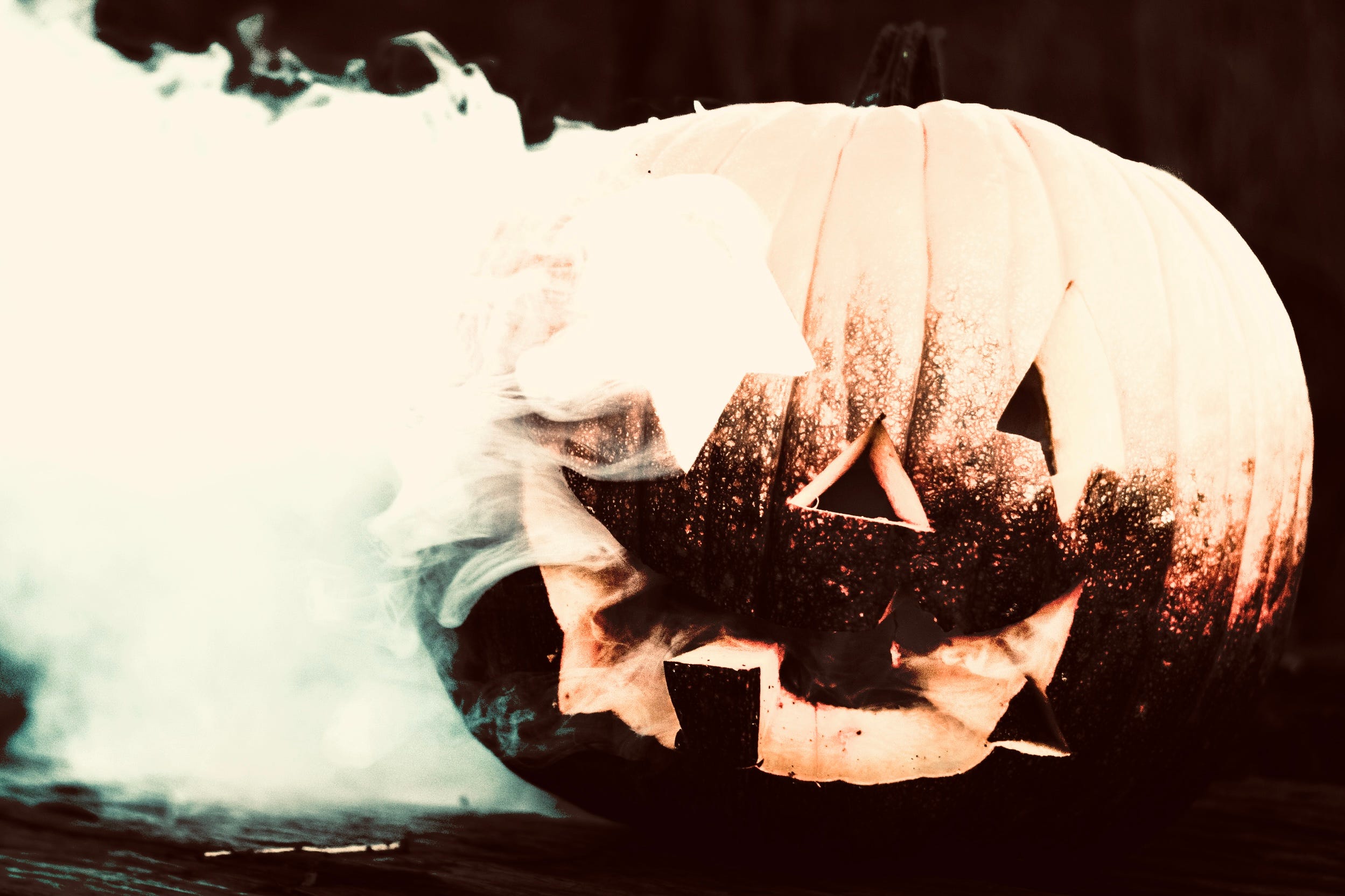
No, her version of saintliness actually requires you to read her stories. And not just read but reflect. And not just reflect but engage, and in so doing be deepened. Through a dedication of time and attention, akin to prayer and meditation. Of course, her statue already exists - it’s her collected works of fiction, reflections and personal letters. I’m lighting a seasonal candle before them with these, my own meagre scratchings of gratitude. And, because I know she wouldn’t want it any other way, I’ll be placing that candle inside my own grotesquely carved pumpkin.
Photo by Colton Sturgeon on Unsplash


I've read much of Flannery. Two stories I regularly used in my creative writing classes were "Good Country People" and "A Good Man Is Hard to Find" because so widely anthologized. I think every writer should at some point read _Mystery and Manners_. I have saved many quotes from that book.